One of the very first lab conducts experiment research about plasma phenomena and vacuum related topics at Ho Chi Minh City University of Education. Pursuit innovative results in plasma physics.
We explore the world in the concept of atomic and nm-scale thickness with many interesting results related plasma and vacuum physics. With various experiment setups about plasma, for both study and research levels.
Plasma is one of the fundamental states of matter. It contains a significant portion of charged particles – ions and/or electrons.
An atom that has lost some of its electrons, thereby attaining an electric charge, is an ion. When a gas is subjected to heat or an electric field, some of its atoms become ions, and the gas is said to be ionized. An ionized gas, unlike a gas in its normal condition, can conduct electrical current to a limited extent. If the heat or electric field becomes extreme, many of the atoms become ions. The resulting super-ionized gas is a plasma, which can conduct a large and sustained electric current.
The behavior and properties of plasmas have aroused interest and creative work among scientists and engineers since plasma is the results of excitation of atom. Plasma contains various information of subtance, and hence becomes an indispensable field called plasma physics that excites researchers with many applications: water treatment, atom analysis, deposition, power supply, treatment…
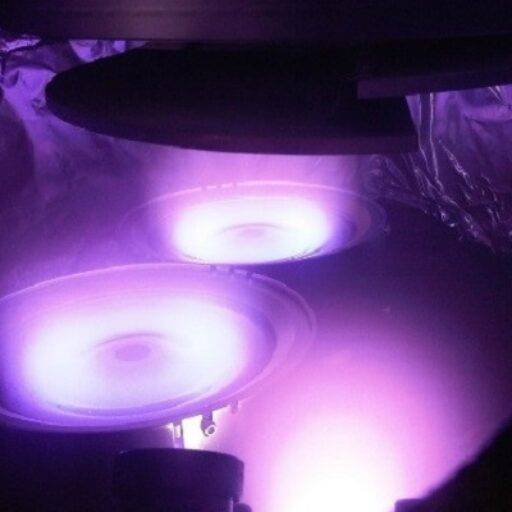


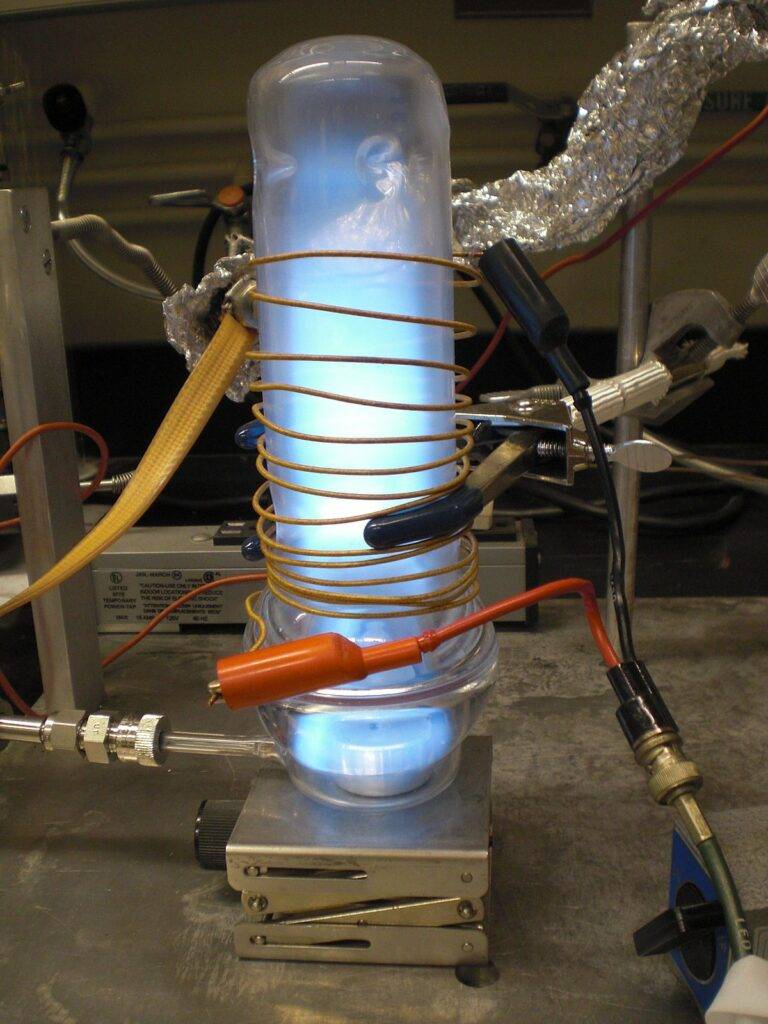

With the great application from the vast information the plasma can bring to us, it is the wonderful chance with promising breakthrough results from plasma-related experiment. We would like to open the new group not only to dive deep in this field but also to inspire enthusiasm of the young generation of experiment reserachers.
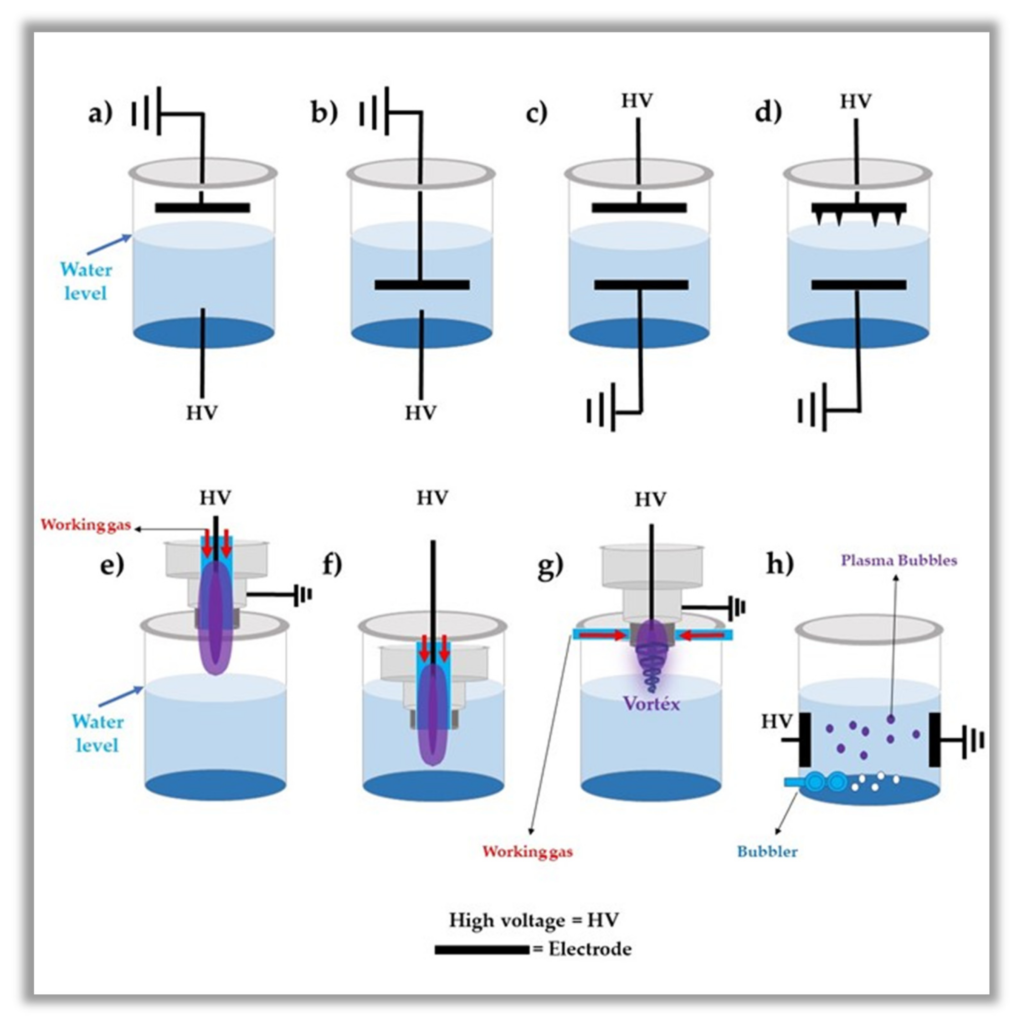
The liquid plasma is generated directly in the liquid or in a transient vapor phase consisting of the liquid with only minor contributions from dissolved gases, such as nitrogen and oxygen. As a result, the reactive species can be very different from those generated in typical gaseous plasmas. Hence, we can estimate not only type of solution but also its concentration.

This kind of plasma can be often observed in tungsten Inert Gas (TIG) welding, also known as Gas Tungsten Arc Welding (GTAW). The information of plasma can help us manipulate the welding condition and increase the welding efficiency.
The first phase of our research will focus on plasmas in liquid and ambient air. These results will help us gather enough technique knowledge and heat up for the second phase.
Which can be applied in both physical vapor depostion (PVD) and chemical vapor deposition (CVD). This plasma play a critical role in control quality of thin film.
We will manipulate plasma in vacuum and use it in sputtering system. This will be the second phase called vacuum plasma.
– Voltage: 650 V – 850V
– Current: 20 mA – 30 mA
– Electrode: Tungsten
– Sample: liquid
– Limit of detection: Cu > 5 ppm, Na >1 ppm, K > 1 ppm, Zn > 1000 ppm, Mn > 200 ppm, Al > 30 ppm, Ca > 20 ppm
– Voltage: 5 V – 10 V
– Current: 5A
– Sample: solid
– Material: Ag, Cu, Fe, Sn, Pb, Al, Zn, Ni, Ti, Mg, Mn, Cr, Sb, Bi, Nb
– Laser power: 50 mW – 1W
– Configuration: 90o and back-scattering
– Resolution: 15 cm-1
– Sample: gas, liquid, solid
– Limit of detection: CH3OH > 0.5% (v/v), C2H5OH > 0.5% (v/v)
– Laser power: 840 mW
– Configuration: back-scattering
– Resolution: 15 cm-1
– Sample: gas, liquid, solid
– Laser source: 1024 nm
– Excitation technique: Xenon + Nd:YAg crystal
– Exposure time: 10 ns
– Sample: solid
– Wavelength: 200 nm – 880 nm
– Source: deuterium-tungsten
and tungsten-halogen source
– Sample: liquid, solid
– Type: Czerny-Turner design
– Wavelength: 200 nm – 880 nm, 400 nm – 640 nm, 700 nm – 1000 nm
– Resolution: 0.3 nm, 1 nm
– Anode electrode: Carbon
– Volume: 500 ml
– Reference electrode: AgCl
– Sensitivity: 0.01 uA
– Hamamatsu Photomultiplier Module H7828
– Hamamatsu R9220 28mm Side-on Photomultiplier Tube and HPMS-1N-L2BSM Socket
– THORLABS PDA10A Si Amplified Detector (200 – 1100nm) w/ 2x 8-32 Mounting Holes
– Keyence LK-H008W laser sensor with LK-HD500 Controller & MS2-H50 PSU
– Accuracy: 5 nm
– Range: 1 cm
– Global Specialties 4001 Pulse Generator 0.5Hz-5MHz Square Wave TTL Tested
+ February 2026: finish diffuse reflectance measurement
+ March 2026: finish 2D LIBS measurement
+ May 2026: finish cyclic voltammetry measurement
+ May 2026: open new project in Radio-Photoluminescence (RPL) dosimeter
May 2026 is the milestones that our lab can conduct experiments relating to solid materials…after 4 years waiting!
+ August 2025: Starting project of reflection optical measurement.
+ August 2025: Starting project of pulsed thermography.
+ August 2025: Starting project of maskless lithography (MPL) using LCD projector.
+ July 2025: Starting project of 5-axis CNC machines.
+ July 2025: Finish DIY Raman equipment using 532 nm laser. Now, we have both 90o and back-scattering configurations for 532-nm Raman system which can detect liquid, solid or even gas samples. The resolution of this system is 15 cm-1 and laser power after going through fiber optic cable can be up to 500 mW.
+ July 2025: Finish Raman system with back-scattering configuration for 785 nm laser. Developing equipment for Raman projects is finished.
+ May 2025: Finish UV-Vis system with measuring range from 200 nm to 880 nm. This is handheld UV-Vis which using two light source: halogen and tungsten-deuterium light sources.
+ January 2025: Finish plasma system using low voltage from DC source.
+ January 2025: Starting plasma system using Q-switch laser source.
+ January 2024: We co-operate with the 175 military hospital for new project.
+ January 2024: we prepare both Nafosted and VINF proposals for the second trial.
+ April 2024: We receive comments from Reviewers and learn a lot from them.
+ July 2024: we start new project with 532 nm Raman spectrometer.
+ August 2024: Call for VINIF 2024 funding successfully.
+ August 2024: Call for HCMUE funding successfully.
+ September 2024: Completed for the 1st HCMUE project under grant number CS.2023.19.56
+ October 2024: Start VINIF 2024 project
+ October 2024: Start the 2nd HCMUE project
+ 1st Feb 2023: Re-model SCGD – AES chamber and stabilize signalsignal stablize
Complete 2nd chamber and stabilize Na+, Cu2+
+ 1st July 2023: CGD`s sensitivity increases to 3 orders of magnitude
It not 100 times but 1000 times! We can detect Na+ at 1 mg/l and Cu at 10 mg/l. Now we start to collect results and create a database!
+ 26th August 2023: Start build raman scattering spectroscopy
This is unexpected. We have enough equipments to build Raman scattering spectroscopy. Thanks Prof. H. D. Tam for kind supports and clear guidances.
+ April 2022: Research plan
Consult with colleagues and start research plan
+ May 2022: Start very first our own project
We start the project about plasma in liquid and ambient air with the support of artificial neural network
+ 13th October 2022: Successfully detect Cu2+
We can observe clearly 5 peaks of Cu2+ in low concentration of CuSO4 solution. This really the huge step since Fe, Pb, Ga… can also be detected by glow discharge technique.
+ 21st November 2022: Successfully detect Fe3+
Thanks for the excellent work of Mr. Khanh. Now, Fe3+ detection is available!
The first chamber for SCGD-AES has been completed. This will help us mass measuring the samples in a short time.

The sputtering system for fabrication nm-scale thin film will be built in 2025. This system will use to study magnetic thin films and spintronic devices in future.
280 An Duong Vuong Street, Ward 4 Disctrict 5 Vietnam| Email: khangnhd@hcmue.edu.vn
© 2023 NK- Lab
